
BABBITT METALS
Magnolia Metal offers a range of babbitt bearing metals designed for lined bearings and demanding industrial service. Use the summaries below to compare typical use cases and select the right bearing metal for your load, shock, heat, and lubrication conditions.
Babbitt Metals We Offer
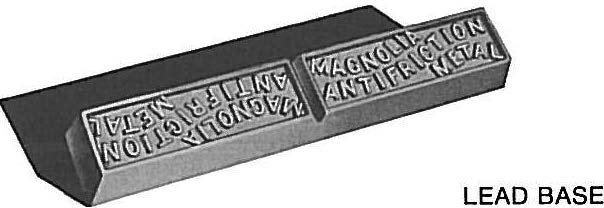
Magnolia Anti-Friction Metal
Lead Based Babbitt
Meets requirements for general use, with good resistance to compression. It is described as having a very low coefficient of friction and being graphite treated and largely self-lubricated.
Typical applications:
Line shafting, electric motors 10 to 250 hp, winches, pumps, propeller shafts, cement mills, and general machinery.
Defender Bearing Metal
Lead Based Babbitt
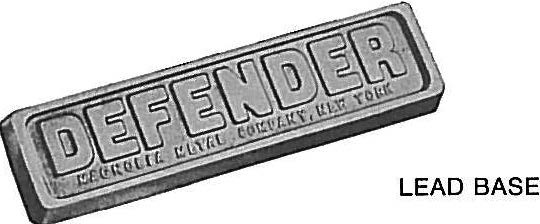
An effective lead base substitute for Adamant, intended for excellent service under shock loads with the possible exception of bearings in some diesel engines. It is described as having better anti friction qualities than Adamant, but requiring care during pouring because it does not bond to the shell as easily as Adamant.
Pyramid Bearing Metal
Lead Based Babbitt
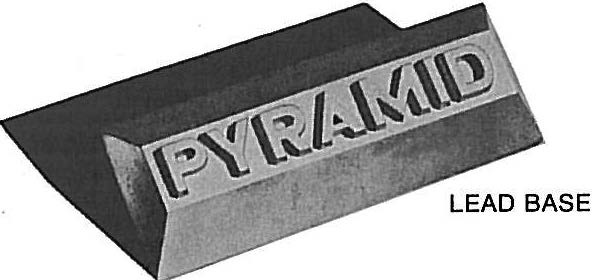
A chemically hardened lead base alloy described as combining hardness, strength, and high melting and softening points. It is described as having a lower coefficient of friction than Power, with cited laboratory and field tests stating Pyramid performs as well as Power under severe service such as paper mill calendar stacks and hydraulic turbines.
Adamant Super-Genuine Babbitt
Tin Based Babbitt
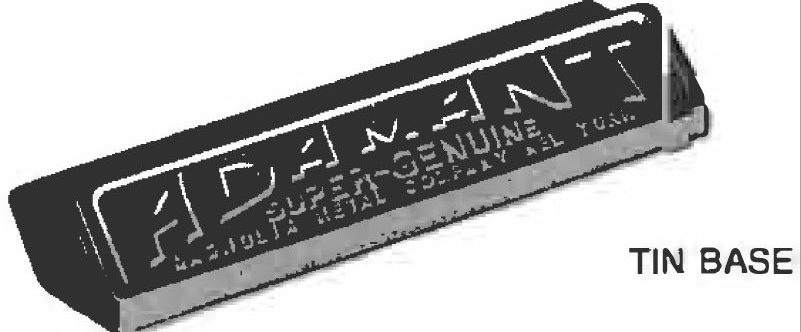
A genuine babbitt metal alloyed for malleability, strength, and toughness, described as not cracking or chipping under extremely severe shock loads. It is described as easy to pour and conforming well to the shell.
Typical Applications:
Internal combustion engines, trap rock crushers, and sifter machinery.
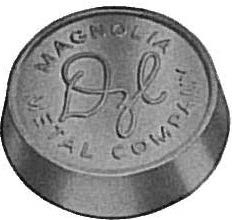
DZL Marine Nickel Genuine Babbitt
Nickel Based Babbitt
A maximum duty tin base babbitt recommended for combinations of excessive shock, heavy pressure, and abnormal temperatures such as diesel connecting rods. It is also described as performing well in rock crusher applications where toughness and embeddability are important, and as being designed to withstand extremely heavy sustained loads and high local heat without squeezing out under very heavy pressure.
Typical applications:
Marine reciprocating engines, water turbines, paper mill calendar stacks, and rolling mill machinery.
Physical Characteristics
| Bearing Metal | Ultimate Strength (lb. per sq. in.) | Yield Point (lb. per sq. in.) | Brinell Hardness | Pouring Range |
|---|---|---|---|---|
| ADAMANT Super-Genuine | 12,850 | 8,625 | 22.8 | 775-825°F |
| DEFENDER | 16,100 | 7,685 | 19.5 | 750-800°F |
| MAGNOLIA Anti-Friction | 18,000 | 8,975 | 23.0 | 750-825°F |
| POWER Nickel-Genuine | 18,500 | 11,600 | 32.1 | 850-925°F |
| PYRAMID | 17,850 | 8,875 | 24.0 | 750-1000°F |
| D-Z-L MARINE Nickel-Genuine | 17,000 | 9,510 | 29.6 | 850-925°F |
| CP-12 Special-Alloy | 17,500 | 9,200 | 24 | 850°F |
Magnolia Bearing Metals Give Longer Service Under Every Kind of Load
Magnolia Isotropic Bearing Bronze
STANDARD BAR STOCK
Standard stock bars are described as 13 inches long for immediate shipment, with another standard length of 26 1/4 inches, and both lengths available in cored or solid bars from 1 inch OD through 26 1/2 inch OD. The page notes that heavier walled competitive bars can increase purchase weight and machining time, and encourages comparing available sizes before ordering.
Magnolia states its bronzes wear longer than ordinary bronzes to reduce downtime and repairs, and that its bronzes are unconditionally guaranteed to be free of defects, including no blow holes, no sand spots, no segregation, and no rejects.
Magnolia Isotropic Bearing Bronze is described as being cast in steel to avoid sand inclusions that can damage tools and wear shafts, with a casting approach described as supporting crystal control and uniform crystalline structure.
Making and Maintaining Journal Bearings
To obtain maximum service from a lined bearing, several factors must be considered.
• Selection of proper bearing metal
• Preparation of the shell and pouring of the bearing metal
• The fit of the finished bearing
• Lubrication
The selection of lining metal depends on the type of load under which the bearing operates. For uniform speed and moderate pressure service such as electric motors, line shafting, and general machinery, the page recommends Magnolia Anti Friction Metal. For extremely heavy sustained pressures such as rolling mill machinery, the page states harder bearing metals such as Power Nickel Genuine Babbitt or Pyramid Babbitt may be required, while noting that shock loads can crack harder babbitts and that Adamant Super Genuine or Defender may be better for shock load applications.
Shells Should Be Well Cleaned
Before relining, remove old metal and thoroughly clean the shell. The page lists methods such as burning, sand blasting, tumbling, wire brushing, and pickling, or combinations of these methods.
Pouring
Molds should be clean, dry, and preheated, and each liner should be poured completely in one operation. The page warns that pouring too quickly can trap air and cause blow holes or seams, shrinkage during cooling may require adding metal promptly, and moisture contact with molten metal can cause an explosion and serious burns.
Finishing the Bearing
Remove excess babbitt, clean lubrication holes, and carefully fit the bearing to the shaft. The page describes boring and scraping to final fit and adding oil grooves for lubrication, noting grooves should not extend to the edge, should be shallow with rounded edges, and should not be too many or too large.
Magnolia Guarantees No Rejects
Magnolia states its bronzes are guaranteed to be free from defects such as blow holes, sand spots, segregated elements, flaws, and under surface faults that cause rejection. The page notes the guarantee is limited to replacement of defective material returned in accordance with industry practice, and cites a quality control return rate of less than 1/2 of 1 percent of all bronze shipped over the last 10 years.
Get in Touch with Magnolia Metal Corporation
Need help selecting a babbitt metal or bronze form for your application? Share your load, speed, lubrication, temperature, and shaft details and our team can help recommend the right material and supply format.